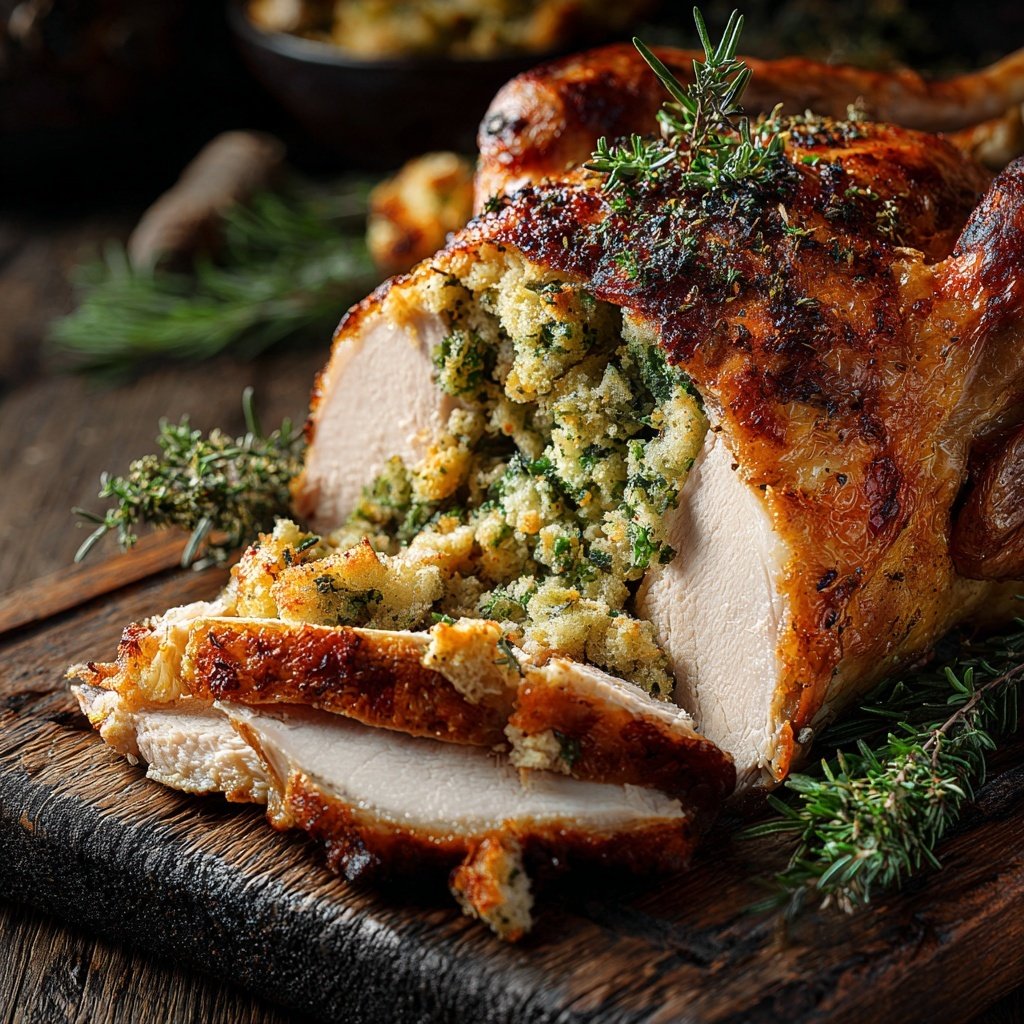
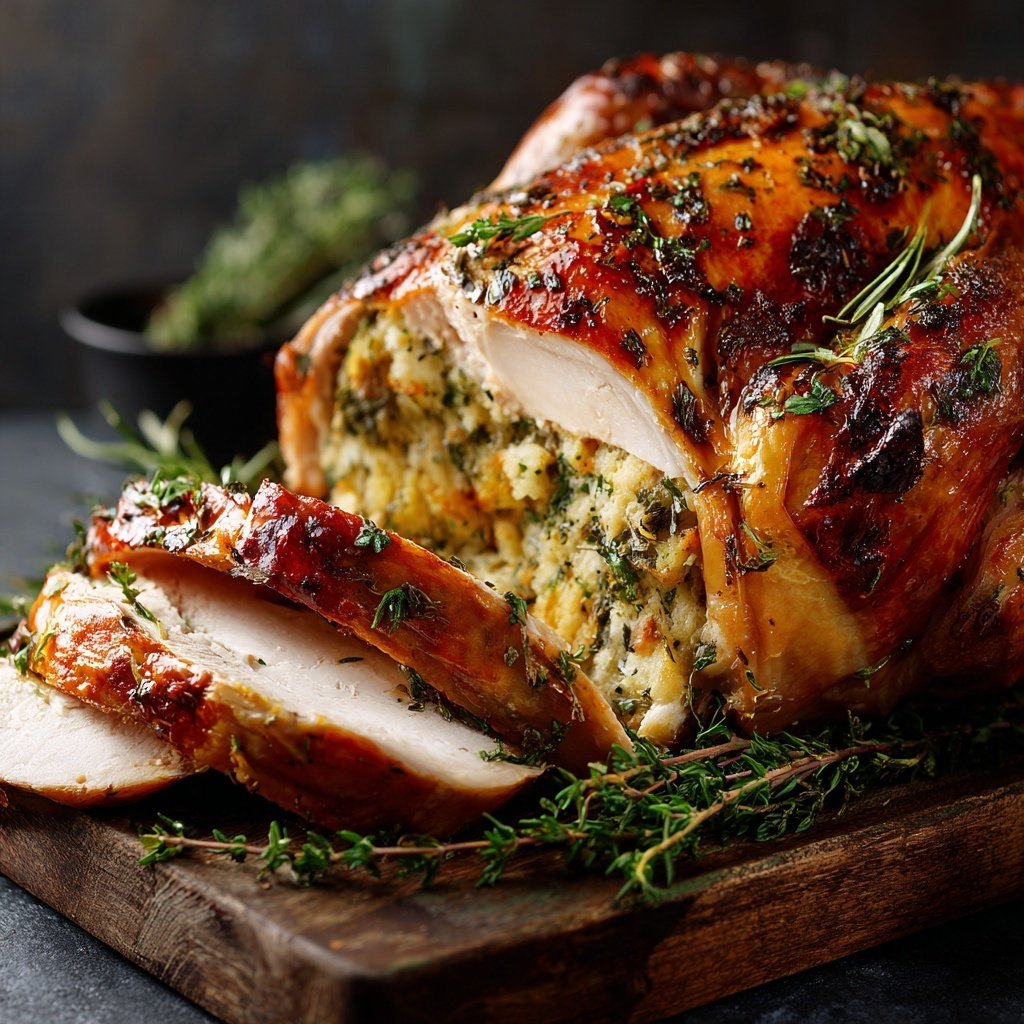
Festive Herb Roast Turkey
Festive Herb Roast Turkey
Choosing the Perfect Turkey
When selecting a turkey for roasting, size is key. For a festive gathering, plan for about 1 to 1.5 pounds per person. A 14 to 16-pound turkey is often ideal for feeding 10 to 12 guests, ensuring plenty of delicious leftovers. Look for a bird that is free-range or organic, which enhances flavor and texture. Fresh turkeys are a wonderful option if accessible, but if you go with frozen, make sure to thaw it in the refrigerator for at least 24 hours per 4-5 pounds.
Don’t overlook the importance of brining, which enhances moisture and flavor. If you're short on time, even a short soak in a saltwater solution for 8-12 hours can make a significant difference. If you're trying to reduce sodium, consider using a dry brine with herbs, which can also help infuse the turkey with additional flavor without the liquid.
Herb Mixture Magic
The herb mixture is essential for infusing the turkey with aroma and flavor. Fresh herbs like rosemary, thyme, and sage work beautifully, as their oils release during roasting, flavoring the meat from the inside out. You can finely chop these herbs and mix them with softened butter to create a herb paste, which should be smeared under the skin for maximum flavor. This technique not only enhances taste but also helps keep the meat moist during cooking.
If you're looking for variations, try adding citrus zest or minced garlic alongside the herbs for an extra dimension. If fresh herbs aren’t available, you can use dried herbs, but you will need less, as their flavor is more concentrated. Generally, one tablespoon of dried herbs can substitute for three tablespoons of fresh herbs.
Roasting Techniques
Achieving crispy, golden skin while keeping the turkey moist is a balancing act that starts with the roasting temperature. Begin roasting at a high temperature of 425°F (220°C) for the first 30 minutes to develop that beautiful golden skin, then lower the oven to 325°F (165°C) for the remainder of the cooking time. This two-phase cooking approach creates a crunchy exterior and ensures the inside reaches a juicy, tender state without drying out.
Basting is a repetitive task during cooking, typically every 30 minutes, which helps continually moisten the skin and keep flavors rich. However, be cautious not to open the oven too often. Each time the door is opened, the temperature drops, which can prolong the cooking time. Use a meat thermometer to check doneness; the internal temperature should reach 165°F (74°C) in the thickest part of the thigh for safe serving.
Storage and Leftovers
After your celebration, let any leftover turkey cool completely before refrigerating it. Store it in an airtight container for up to three to four days. With turkey sandwiches and salads being crowd-pleasers, you'll want to keep it accessible. For longer-term storage, you can freeze leftover turkey for up to six months. Slice meat or pull it apart before freezing in portion-sized containers, making it easy to thaw only what you need.
To reheat, place slices of turkey in a baking dish covered with foil and warm it in the oven at 325°F (165°C) until heated through. Adding a splash of broth can keep it moist during the reheating process, helping retain that juicy tenderness you worked hard to achieve.
Serving Suggestions
A festive herb roast turkey pairs perfectly with classic sides like mashed potatoes, cranberry sauce, and stuffing. When planning your menu, consider adding a fresh salad with a citrus dressing to balance the richness of the turkey. The acidity from the dressing can cut through the fat, making each bite more enjoyable.
For a unique twist, use the carcass and leftover meat to make a rich turkey broth or soup. Simmer the bones with vegetables and seasonings for 1-2 hours, then strain out the solids. This homemade broth can be the base for risottos or hearty stews, ensuring you make the most of your turkey.
Troubleshooting Common Issues
If your turkey skin isn’t browning as desired, it may be due to too much moisture or not starting with a high enough temperature. Ensure that your turkey is properly dried before seasoning and consider using a convection setting if your oven has one, as it promotes even browning. If the skin is browning too quickly while the meat is still undercooked, loosely cover it with foil midway through roasting to shield it from direct heat.
Overcooked turkey can lead to dry, tough meat. Monitor doneness with a thermometer diligently, pulling the turkey out just a few degrees below the target temperature, as carryover cooking will raise it slightly while resting. Remember, practice makes perfect; each turkey is unique, and with every roast, you’ll learn what works best for your particular oven and cooking environment.